




















































The Independent National Electoral Commission (INEC) has begun the process of a comprehensive overhaul of regulations guiding political parties ahead of the 2027 general elections, drawing immediate reactions from party leaders and civil society.
Political parties, in response to the commission’s intentions, raised concerns about the 2026 Electoral Act, describing aspects of it as restrictive and impractical. Civil society organisations, on the other hand, raised questions about implementation, transparency and inclusivity.
The drafting of the guidelines is in line with the provisions of the Electoral Act. The regulations and guidelines span party registration and mergers, internal operations, conduct of primaries, campaign activities, financial transparency and conditions for deregistration, among others.
However, the proposed framework was presented yesterday at a high-level consultative meeting between the commission and leaders of political parties in Abuja, signalling what INEC described as a decisive step towards strengthening transparency, accountability and internal democracy within political parties.
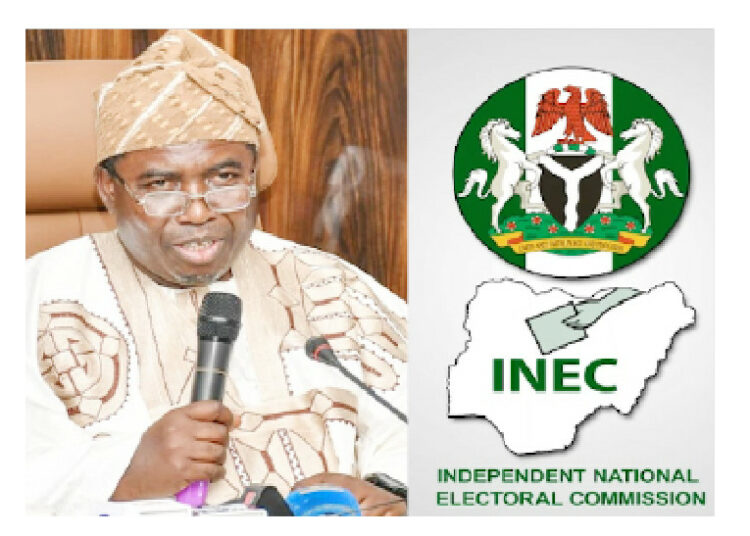
INEC Chairman, Prof. Joash Amupitan, said the revised regulations were the outcome of a rigorous technical review of the 2022 guidelines and have now been realigned with the provisions of the Electoral Act 2026.
He stressed that credible elections begin long before voting day, highlighting the importance of transparency in candidate selection processes.
“We cannot navigate a 2027 horizon using a 2022 map,” Amupitan said, noting that the reforms were necessary to close gaps that have historically undermined the credibility of elections in Nigeria.
He reiterated that credible elections begin with transparent processes within political parties, particularly in the conduct of primaries, which he described as the foundation of the entire electoral system.
“We gather not only to discuss the newly drafted INEC Regulations and Guidelines for Political Parties, 2026, but also to reaffirm our collective commitment to enhancing the democratic process in Nigeria.
“Credible elections begin long before polling day; they begin in the transparency of the processes that produce the candidates,” he said.
Amupitan explained that the revised guidelines followed a comprehensive review of the 2022 regulations and were informed by empirical findings, including the Political Party Performance Index developed with support from the Westminster Foundation for Democracy.
He noted that the review exposed a “disturbing gap between party constitutions and grassroots realities”.
He added that the new framework introduces reforms across key areas such as party registration and mergers, internal operations, conduct of primaries, campaign activities, financial transparency and conditions for deregistration. According to him, the measures are aimed at curbing irregularities, particularly in party primaries.
“These guidelines aim to sanitise party primaries and end opaque processes that impose unpopular candidates, fuelling voter apathy and avoidable litigation,” he said.
The INEC chairman also highlighted provisions on campaign finance, noting that the Electoral Act 2026 empowers the commission to determine election expenses in consultation with political parties. He urged stakeholders to pay close attention to clauses relating to funding and expenditure.
With the 2027 general elections scheduled for 16 January for presidential and National Assembly polls, and 6 February for governorship and state assemblies, Amupitan warned that the commission is operating within a compressed timeline.
“We are operating within a compressed timetable, which demands what I call surgical precision,” he noted.
Amupitan also drew attention to the tight election timetable, announcing that presidential and National Assembly elections will be held on 16 January 2027, while governorship and State Houses of Assembly elections are scheduled for 6 February 2027.
He explained that the compressed timeline, resulting from amendments to the Electoral Act 2026, requires what he termed “surgical precision” from both the commission and political parties.
The INEC chairman disclosed that the review was guided by empirical data, including findings from the Political Party Performance Index (PPPI), which exposed a significant gap between party constitutions and actual practices at the grassroots level.
The updated guidelines span critical areas such as registration and merger of political parties, internal party administration, conduct of primaries, campaign activities and political financing.
They also introduce clearer rules on election expenses in line with the Electoral Act 2026, particularly provisions requiring consultation with political parties in determining spending limits.
In addition, the regulations set measurable benchmarks to improve the inclusion of women, youths and persons with disabilities in party structures and candidate selection processes.
Amupitan said the commission had also strengthened provisions for monitoring party finances and enforcing compliance, warning that violations could attract sanctions, including possible deregistration.
He urged political parties to view the new guidelines as safeguards rather than constraints, stressing that they are designed to protect the integrity of the electoral process from candidate nomination to the declaration of results.
The commission, however, said the presentation is a draft copy of the updated manual, which is expected to be unveiled at a later date.
However, political parties under the Inter-Party Advisory Council (IPAC) pushed back strongly against the broader legal framework underpinning the new regulations.
IPAC National Chairman, Dr Yusuf Dabo Dantelle, warned that unresolved issues in the Electoral Act 2026 could undermine preparations for the 2027 elections if not urgently addressed.
He described the Act as a “regression” that failed to reflect the expectations of Nigerians who participated in public consultations during the amendment process.
According to him, the law has placed significant pressure on political parties, particularly those outside government, limiting their ability to organise and compete effectively.
Dantelle called on the National Assembly of Nigeria to urgently revisit the Act, with specific demands for the removal of mandatory direct primaries.
He argued that the method of candidate selection should remain the exclusive prerogative of political parties, warning that legislative imposition could weaken internal party democracy rather than strengthen it.
The IPAC chairman also criticised the requirement for political parties to submit membership registers, including members’ National Identification Numbers (NIN), within a narrow timeframe, describing it as unrealistic and potentially disenfranchising millions of Nigerians without access to registration facilities.
On electoral transparency, Dantelle reiterated calls for the full restoration of electronic transmission of election results, insisting that results from polling units should be uploaded immediately after declaration.
He warned that any ambiguity in the law regarding result transmission could erode public confidence and revive controversies similar to those experienced in previous elections.
Dantelle further expressed concern over what he described as weakened penalties for vote-buying in the new law, calling for the establishment of an Electoral Offences Commission to ensure accountability and deter malpractice.
He added that IPAC had already taken steps to engage the National Assembly and was also reaching out to development partners to support efforts aimed at strengthening Nigeria’s democratic process.
Despite the sharp disagreements, both INEC and political parties acknowledged the importance of continued dialogue in refining the regulatory framework ahead of the 2027 elections.
Amupitan assured stakeholders of the commission’s neutrality, stressing that INEC would remain firm in its role as an unbiased umpire while taking a more proactive stance in safeguarding democratic values.
Engage INEC On Register Submission Deadline – Yiaga Africa
Yiaga Africa has urged political parties to engage INEC constructively and provide clear, practical feedback, particularly on the deadline for the submission of party membership registers.
The Executive Director of Yiaga Africa, Samson Itodo, said this while reacting to the release of guidelines by the commission for political parties ahead of the 2027 general election.
“It is encouraging to see the commission engaging political parties on the draft guidelines. The guidelines are far-reaching and cover several critical areas of the electoral process.
“It is important for parties to engage the commission constructively and provide clear, practical feedback, particularly on the deadline for the submission of party membership registers.
“The deadline set by INEC can be reviewed and amended, given that the Electoral Act clearly provides that political parties shall submit their membership register to INEC not later than 21 days before the date fixed for their primaries,” Itodo stated.
INEC Release Of Guidelines Timely But Implementation Key – CISLAC
The Civil Society Legislative Advocacy Centre (CISLAC) has described the issuance of guidelines by INEC for political parties in preparation for the 2027 general elections as both timely and necessary.
The organisation, however, said the success of the development will depend heavily on implementation, transparency and inclusivity.
ALSO READ:
Executive Director of CISLAC and Head of Transparency International Nigeria, Auwal Musa Rafsanjani, made this observation in an interview in Abuja.
“The Civil Society Legislative Advocacy Centre (CISLAC) acknowledges the recent issuance of guidelines by the Independent National Electoral Commission for political parties in preparation for the 2027 general elections, in line with the provisions of the Electoral Act 2026.
“CISLAC considers this development both timely and necessary, but notes that its success will depend heavily on implementation, transparency and inclusivity. CISLAC commends INEC for aligning with the Electoral Act 2026.
“The review of party guidelines demonstrates institutional commitment to legal compliance and electoral reform. INEC has initiated updates to its regulations and party frameworks to reflect the new law ahead of 2027.
“The guidelines—especially around primaries and party processes—can help address long-standing issues such as imposition of candidates and lack of transparency in party membership systems.
“The stricter requirements, such as submission of digital membership registers, aim to improve accountability. The release of guidelines well ahead of party primaries (expected in 2026) supports better planning and reduces last-minute manipulation of processes.
“However, despite these positives, CISLAC raises the following concerns: risk of exclusion and elite capture. Some provisions of the Electoral Act 2026—particularly restrictions on party primaries (e.g. emphasis on direct or consensus models)—may limit participation and strengthen control by political elites. Again, it may undermine grassroots democracy,” he said.
Leadership