







































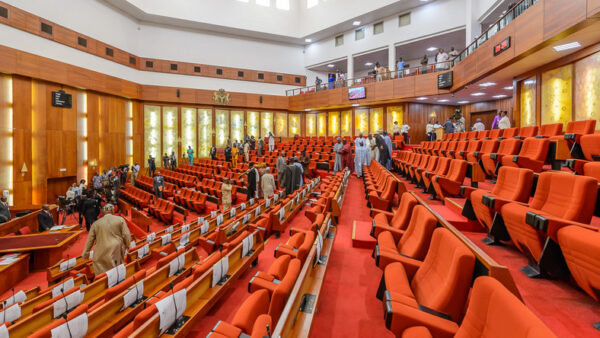
The Senate has passed a bill which seeks the establishment of the Bitumen Development Commission in Nigeria.
The Senate said that Nigeria’s bitumen deposits, which are in high deposit in the south-western part of this country, cutting across Ogun, Ondo and Edo States, within the onshore part of the Dahomey Basin, are the second largest in the world, with estimated reservies, ranging from 13 to 42 billion barrels, almost twice Nigeria’s oil reserve.
It said that, however, this huge natural endowment is yet to be fully exploited for the maximum benefit of the country, hence the need for the proposed legislation:
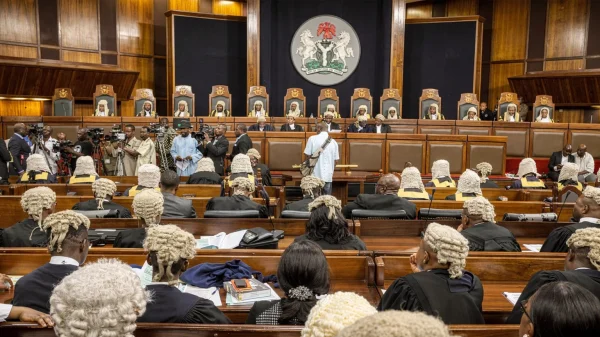
The bill was read the third time and passed by the Senate on Wednesday following the presentation and consideration of a report of the Committee on Solid Minerals Development on the Bitumen Development Commission Bill.
According to the Senate, the passage of the Bill became imperative because despite the availability of this nature gift, in this country, there is no robust and cogent legal and legislative framework in place to fully regulate bitumen development, exploration and exportation in the country.
It said that the Bill is a product of a well-researched effort, geared towards enacting legislation that seeks to bring out an effective and efficient institutional blueprint for bitumen regulation in the country.
The passed bill will help promote research, study, investment, exploration, production exportation, development, and utilization of locally sour in Nigeria as well as develop policies regarding the regulations of blumen in Nigeria and it will provide funding for bitumen research activities and for small-scale exploration and production activities directly connected to the utilization of bitumen in Nigeria.
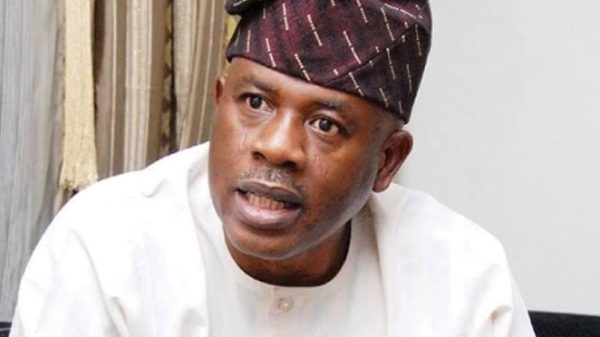
The report presented by a member of the committee, Senator Diket Plang ( APC Plateau Central) , recommended that Bitumen Development Commission should be established as proposed by the sponsor of the bill, Senator Jimoh Ibrahim, APC, Ondo South.
Senator Plang informed the Senate that the committee in line with legislative procedures, carried out public hearing on the bill and got overwhelming submissions from critical stakeholders in the country for establishment of the commission as required regulatory body for exploitation, exploration and production of the 42billion tonnes of Bitumen deposits in Nigeria which is the second largest in the world.
Earlier in his presentation of the report, Senator Plang said, “That bitumen, being a key component of asphalt used for road and other industrial applications, should, as a matter of priority, be extensively harnessed for both domestic and external use to add to the country’s revenue for socio-economic development;
“The cost of road construction in the country, currently, is very high due to the importation of asphalt into the country by construction companies. However, the passage of this Bill will undoubtedly put modalities in place for full exploration of bitumen in the country, which will invariably reduce the cost of road construction in the country.
“That the passage of this Bill will encourage the use of locally sourced bitumen, thereby fostering the development of local content requirement standards in the construction industry and other related sectors”;
“That bitumen is recognised as one of the Nigeria’s foremost strategic minerals, along with other resources, such as coal, iron ore and gold, highlighting its strategic importance to the country’s resource ecosystem”;
“That the passage of this Bill aligns with the current administration’s drive in its quest for economic diversification from its profound reliance on oil for its foreign exchange”; and,
“That optimum and maximum exploration, extraction and processing contemplated by the provisions of this Bill, will no doubt, create numerous employment opportunities for Nigerians, hence the need for the Senate to expeditiously enact this Bill as an Act of the National Assembly.”
In his remarks , the President of the Senate , Senator Godswill Akpabio, thanked the sponsor of the bill and the Senate Committee on Solid Minerals Development for the development-driven initiative.
Vanguard