










While some analysts have welcomed the asset freeze sanctions of eight Nigerians as a constructive step toward weakening insurgent operations, others warn that deeper involvement could undermine Nigeria’s sovereignty.
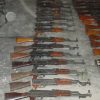
Heightened scrutiny over terrorism in Nigeria has prompted decisive action from the United States Department of the Treasury, which in February announced asset freezes against eight Nigerians accused of links to Boko Haram and Islamic State of Iraq and the Levant (ISIL).
In the document released by the United States Treasury’s Office of Foreign Assets Control (OFAC), the sanctions, issued under Executive Order 13224, blocked all property and financial interests of the named individuals within United States jurisdiction and prohibit American entities from engaging in transactions with them.
Among those designated is Salih Yusuf Adamu, also known as Salihu Yusuf, linked to Boko Haram.
He was among six Nigerians convicted in 2022 in the United Arab Emirates (UAE) for setting up a Boko Haram fundraising cell, attempting to send $782,000 from Dubai to Nigeria.
Other individuals listed include Abu Musab Al-Barnawi, Abu Abdullah ibn Umar Al-Barnawi, Khaled Al-Barnawi, Abu Bakr Al-Mainuki, Babestan Oluwole Ademulero, Ibrahim Ali Alhassan, and Nnamdi Orson Benson, with sanctions ranging from terrorism-related to cybercrime-related offences.
For Chief Executive officer, Centre for the Promotion of Private Enterprise (CPPE), Muda Yusuf, the asset freezing is a constructive development, as targeting not only terrorist actors but also their financiers is critical to weakening insurgency networks.
He stated that effective implementation, however, must be evidence-based, legally sound and precisely targeted, given that insecurity remains one of Nigeria’s most severe economic constraints, damaging investment, productivity, and international reputation.
Yusuf added that any credible international collaboration aimed at disrupting terror financing should be supported.
He stressed that Nigeria already maintains counter-terrorism cooperation with the United States, and enhanced intelligence-sharing and financial tracking can materially improve outcomes.
“Asset-freezing measures targeting terrorism financing are commendable if properly executed,” Yusuf said.
Professor of Political Science at Lagos State University (LASU), Sylvester Akhaine, stressed that Nigeria does not need United States to fight terrorism.
He said that people who have access to power are sponsoring terrorism in Nigeria and destabilising the state for different reasons such as economic and need to control power.
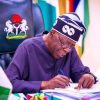
Akhaine emphasised that bringing in America to the issues of terrorism in Nigeria is an attempt to tie the nation to the Apron strings of the United States as a security appendix, which he said is not good for Nigeria’s image.
“If you understand the way these people work, you know they are likely to even sustain the terrorism network to justify their bases in Nigeria or why they are here. That will ultimately happen. So the president is better advised to thread cautiously in dealing with the Americans.
“I have argued that this is not the first time we are having something to do with the Americans, but what is different this time is that they are trying to entrench themselves in Nigeria, saying they will do so by minimal boots on the ground. That is why I think it is dangerous,” the Prof said.
ALSO READ:
- https://www.ktnn.ng/us-imposes-sanctions-on-eight-nigerians-for-alleged-boko-haram-cybercrime-links/
According to him, Nigerians generally are anti imperialists, right from the protest against the Anglo-Nigerian Defence Pact. Even when the African Command was formed, America, he said, was looking for a base in Africa, but Nigeria was opposed to it.
“Nigeria must be able to exert its own independence, foreign policy and relations that is void of any interference,” he added.
Senior Research Fellow at the Nigerian Institute of International Affairs (NIIA), Dr Nicholas Erameh, stressed that before the United States released the names they must have been sure of the claims.
He noted that the fight against terrorism and insurgency has become more complex to deal with, stating that network, and funding are major contributors to terrorism, so freezing such funds is an effective way of starving their operations.
He added that freezing their accounts is also another way to name and shame, which can make the accused detest from the crimes, adding that these actions are welcomed development as it could reduce the activities of terrorist in Nigeria.
The action follows recommendations from the United States Congress for visa bans and asset freezes on individuals and groups accused of violating religious freedoms and persecuting Christians in Nigeria.
The warning came after a coordinated attack on Christmas day in Sokoto state, northern Nigeria targeting Islamist militants, which he said were part of a broader military campaign.
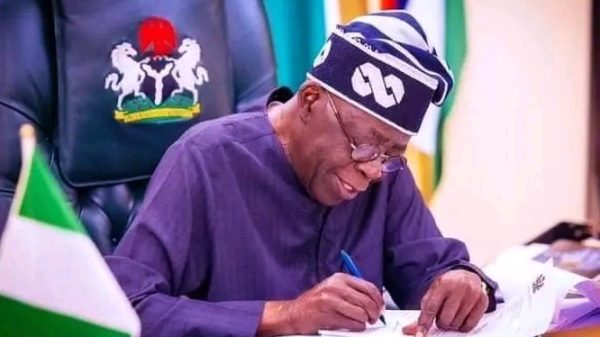
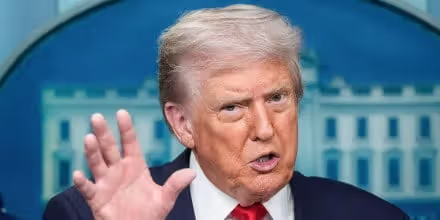
Recently, Trump sent United States troops to Nigeria to counter Islamic terrorism. The move, announced by United States Africa Command (AFRICOM), follows a meeting between U.S. General Dagvin Anderson and Nigerian President Bola Tinubu in Rome last year.
Nigeria’s government has rejected Trump’s earlier accusations that it is failing to protect Christians from jihadist attacks, saying that “Muslims, Christians and those of no faith alike” are targeted.
Boko Haram was officially designated a foreign terrorist organisation by the United States in 2013 and is blamed for thousands of deaths across northern Nigeria.
Guardian