














































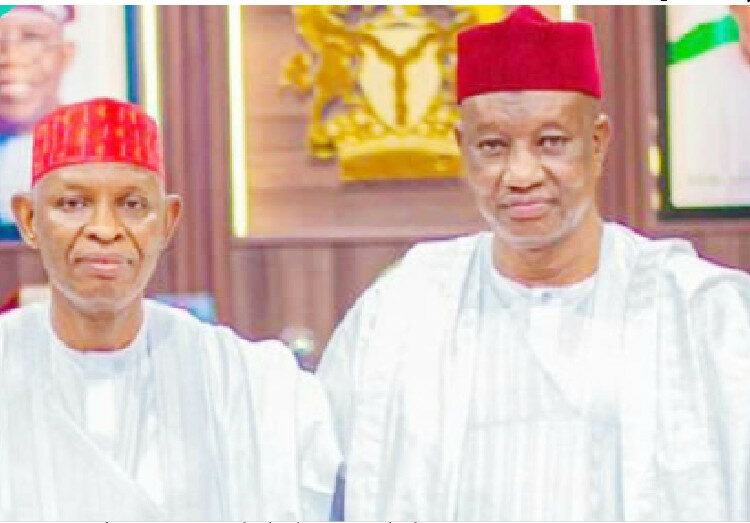
Pressure is beginning to mount on Kano State Deputy Governor, Aminu Abdussalam Gwarzo, to resign over his refusal to join his boss, Governor Abba Yusuf, in defecting to the All Progressives Congress (APC).
The Kano State Commissioner for Information and Internal Affairs, Ibrahim Waiya, had advised the deputy governor to resign, adding that his continued participation in executive affairs without political alignment undermines trust and confidentiality in governance.
But the New Nigeria Peoples Party (NNPP) has rejected the call for the deputy governor’s resignation, saying that the State Executive Council is a constitutional body that should not be dragged into partisan disputes.
Concern about the fate of the deputy governor had emerged shortly after Governor Yusuf’s defection on Monday. Governor Yusuf and Gwarzo were elected on the NNPP platform.
However, the deputy governor is a staunch loyalist of the former governor of Kano State, Dr Rabiu Musa Kwankwaso, who also heads the Kwankwasiyya Movement, of which Governor Yusuf was a prominent member before switching to the ruling APC.
The immediate-past deputy governor of Niger State, Ahmed Mohammed Ketso, said Gwarzo would have to navigate a precarious political terrain that could culminate in his impeachment.
Ketso, in an exclusive interview said while the governor and his deputy might try to be mature about their relationship, other political actors would come between them, leading to his likely impeachment by the State’s House of Assembly.
The governor moved to the ruling party alongside 22 state lawmakers, eight federal legislators, 44 local government chairmen and 484 councillors.
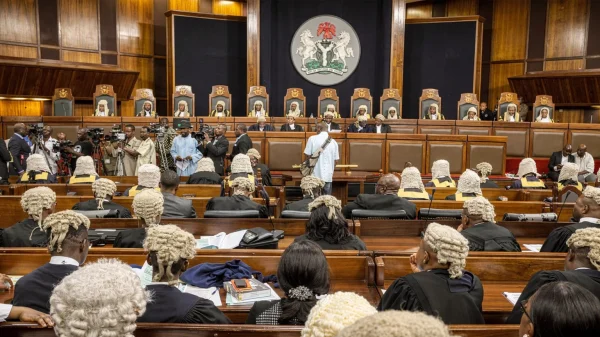
Earlier, the State House of Assembly had 24 NNPP members and 14 APC members, excluding the two NNPP lawmakers who died recently.
Of the 24 NNPP members, 22 defected along with the governor to the APC, raising the APC’s numbers in the State Assembly to 36, with two vacant seats and two NNPP members. The State Assembly is expected to resume on Monday.
Resign now, Commissioner tells dep gov
The Information and Internal Affairs Commissioner, Waiya, during a local radio programme, stressed that loyalty and mutual confidence were central to effective governance.
Waiya said it was incompatible for a senior government official who no longer aligned with the administration’s political direction to continue attending routine executive council meetings. He raised concerns over trust and the handling of sensitive government information.
“This is his personal decision, but there is no way someone who is no longer with you should be part of routine council meetings.
“Who knows with whom he might share important government secrets? In government, things are done based on trust, and you can’t trust someone who is not with you,” he said.
According to him, resignation would be the most honourable option open to the deputy governor under the circumstances.
“If I were him, I would humbly resign,” he said.
The remarks come amid broader political developments in the state, particularly the recent defection of Governor Yusuf to the APC.
Waiya described the move as being in the best interest of Kano State, noting that closer alignment with the Federal Government would enhance access to development projects and federal interventions.
He said residents should expect greater dividends of democracy, especially in critical sectors such as infrastructure, health, education and social welfare, as a result of improved collaboration with the centre.
NNPP rejects calls for deputy governor’s resignation
In its reaction, the NNPP raised objections to the call by the Kano State Commissioner for Information and Internal Affairs, Ibrahim Waiya, for the resignation of the deputy governor, insisting that he remains constitutionally empowered to continue in office.
The party’s publicity secretary, Engr Ibrahim Karaye, described the commissioner’s remarks as politically motivated and contrary to constitutional provisions guiding governance in the state.
ALSO READ:
The party stressed that the deputy governor, having emerged on a joint ticket with Governor Abba Yusuf, retains the legal and constitutional right to remain in office and discharge his responsibilities, regardless of party realignments.
“The deputy governor is a critical pillar in the governance structure of Kano State and remains entitled to his position under the constitution,” the statement said, adding that the State Executive Council is a constitutional body that should not be dragged into partisan disputes.
Engr Karaye further noted that the deputy governor has played a significant role in the administration’s achievements so far, arguing that attempts to undermine his position could threaten government stability.
The NNPP also took a swipe at Commissioner Waiya, stating that he was not actively involved in the political struggles that led to the emergence of the current administration and, therefore, lacked the moral authority to question the deputy governor’s loyalty or contributions.
Leadership