

































By Mark Chieshe
From cement to fertilizers and now refining, Aliko Dangote’s bet on backbone industries is reshaping supply chains, prices, and perceptions of what’s possible on the continent—while igniting an overdue debate about market power.
The big idea
Every industrial era has its emblematic builder. For Africa’s present moment, that figure is Aliko Dangote—an entrepreneur who keeps placing outsized wagers on sectors others deem too complex or capital-intensive, then forcing markets to bend around new capacity. His 650,000 bpd mega-refinery in Lagos, pan-African cement footprint, and fertilizer complex together form a single thesis: Africa can make the hard stuff at scale, keep value onshore, and export the surplus.
Refining: the keystone wager
Dangote Petroleum Refinery is the center of gravity. Built with an integrated 1,100-km pipeline system and a 435 MW power plant, it’s engineered to process a full Nigerian crude slate and run largely off-grid—an industrial city within a city.
After a staggered ramp-up through 2024–25, the refinery announced nationwide distribution of petrol and diesel from August 15, 2025—backed by a fleet of 4,000 CNG trucks to push product directly to forecourts and large users. The logistics armada matters: distribution has long been the choke-point in Nigeria’s downstream.
On the trading side, the plant isn’t just supplying Nigeria; it has begun exporting gasoline farther afield, including an Asia-bound cargo in June 2025—signals that production volumes and quality specs are clearing global bars. Analysts expect the refinery’s scale to redraw product flows between Europe and West Africa.
Perhaps the most visible macro effect: Nigeria’s long run as Africa’s top fuel importer is ending as domestic refining rises. CITAC and other trackers report Nigeria slipping behind South Africa on import volumes in 2025—a symbolic flip few thought imminent five years ago.
And the regional ambition is clear. Plans for new storage in Namibia point to a southward supply corridor that could knit Botswana, Namibia, Zambia, and Zimbabwe into a Dangote-anchored product network.
Food security bet: fertilizer at scale
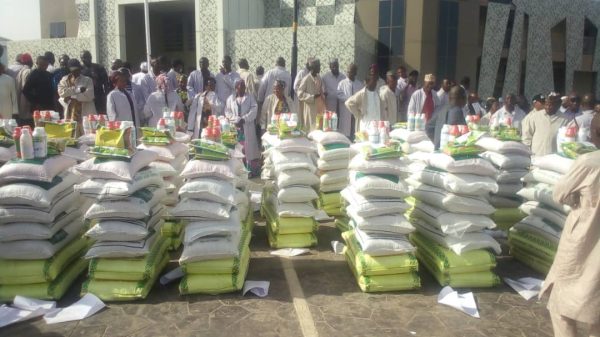
Before fuels, there was soil. Dangote Fertiliser—Africa’s largest urea complex—was built to produce about 3 million tonnes per year, cutting import dependence and feeding regional trade. This month, Dangote inked a $2.5 billion deal with Ethiopia to build another plant targeting a similar 3 Mtpa output. The through-line is food security: affordable inputs for African farmers, made in Africa.
Cement and the civilizational basics
Cement is where the empire matured—and still throws the cash flow that underwrites audacity. Dangote Cement runs roughly 52 Mtpa of capacity across 10 countries, making it Sub-Saharan Africa’s largest producer and a proxy for urbanization cycles from Lagos to Lomé.
Philanthropy and public health
Through the Aliko Dangote Foundation, the billionaire has spent the past decade pairing capital with convening power—most visibly in health. In 2025 the Foundation signed a new immunization MoU in Chad, while Bill Gates publicly credited Dangote’s partnership as part of Nigeria’s hard-won progress against polio. It’s a reminder that industrialization and human development must advance together.
The critiques—and the counter-arguments
When a single private actor builds capacity this large, scrutiny follows. In early 2025, Dangote’s refinery sought to halt gasoline imports via the courts, arguing local output could meet demand; regulators and rivals pushed back, warning of monopolistic outcomes. By July, the company withdrew the suit and moved to work within a more plural market—while also wrestling with the FX reality of buying crude in dollars and selling fuel in naira. These tensions are not trivial: they go to the heart of competition, consumer prices, and energy security.
Beyond the courtroom, a bruising price war unfolded as the refinery cut ex-gate petrol prices and marketers scrambled to adjust—good for consumers in the short run, but a test of whether Nigeria can preserve competitive dynamics as domestic refining scales. Policymakers will need to safeguard open access to crude, pipelines, ports, and retail channels.
Why this matters for Africa’s rise
1) Hard-infrastructure capacity. Africa’s growth story has long been bottlenecked by imported inputs and thin logistics. Refining, fertilizers, and cement are “first-order” capabilities; once they exist, many other industries become viable.
ALSO READ:
2) Foreign-exchange resilience. Cutting fuel and fertilizer imports shrinks dollar leakage and smooths currencies—especially in commodity cycles. The refinery’s ramp has already dented Nigeria’s import bill and is reshaping West Africa’s gasoline trade.
3) Regional integration. Storage and distribution nodes (e.g., Namibia) turn one plant into a network, creating cross-border price and supply stability—an AfCFTA-friendly outcome if regulators coordinate.
4) Signalling effect. Perhaps the most important dividend is psychological: the notion that African firms can finance, build, and operate assets on par with any in the world—and export surplus competitively.
Where the story goes next
Three variables will determine the legacy:
- Crude supply at scale. Ensuring predictable feedstock—via domestic quota enforcement and diversified imports—so the plant runs at efficient utilization.
- Market openness. Guarding against any single-gatekeeper model in distribution and retail. Healthy competition will keep prices honest and innovation alive.
- Export discipline. Balancing foreign-market opportunities with domestic affordability, so the refinery’s global reach doesn’t eclipse its national mandate.
Key stats at a glance
- Refinery nameplate: 650,000 bpd; pipeline: ~1,100 km; power: 435 MW. (Dangote Industries Limited)
- Nationwide fuel distribution start: August 15, 2025; 4,000 CNG trucks deployed. (Dangote Industries Limited, Reuters)
- Fertilizer: ~3 Mtpa urea complex in Lagos; new $2.5 b Ethiopia plant targeting 3 Mtpa. (Dangote Industries Limited, Reuters)
- Cement: ~52 Mtpa capacity across 10 countries. (Welcome to Dangote Cement Plc)
- Net worth: #1 in Africa in 2025 (Forbes). (Forbes)
Verdict: a builder in knight’s armor—tempered by the rulebook
Calling Dangote the “Knight of Africa’s Rising” isn’t hyperbole; it’s a description of strategy. He is arming the continent with industrial tools it has long outsourced—sometimes clumsily, often controversially, but undeniably at scale. The task for regulators, competitors, and citizens is to channel that scale for broad benefit: fair access to crude and infrastructure, transparent pricing, and a level playing field that welcomes more builders into the arena.
If Africa is indeed rising, it will do so on foundations poured by those who choose to build. For better or worse, Dangote has picked up the lance. Now the continent must set the rules of the tournament.
Mark Chieshe is a public policy analyst and Special Assistant to the Hon. Minister of Housing and Urban Development