































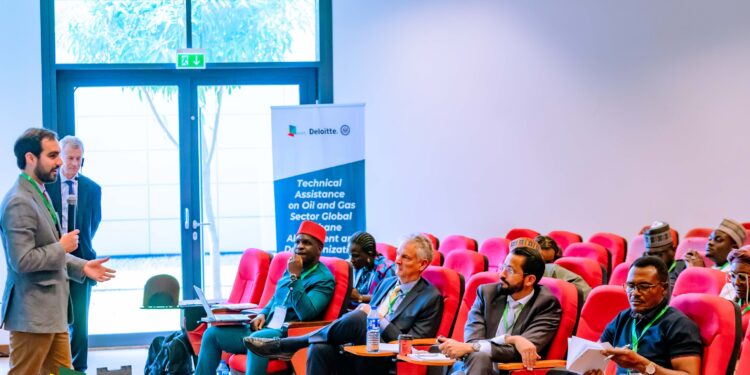
The Nigerian National Petroleum Company Limited (NNPCL), Africa’s largest oil company, is seeking to collaborate with the United States Department of State and global management consultancy firm Deloitte to address greenhouse gas emissions associated with OML 34.
Mr. Olufemi Soneye, the Chief Corporate Communications Officer at NNPCL, revealed on Monday that the project is still in its early conceptual stage.
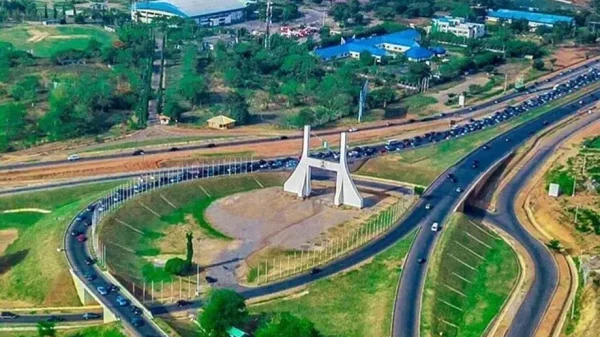
The three-day Technical Assistance on Oil and Gas Sector Global Methane Abatement and Decarbonization Workshop commenced at the PTDF Towers in Abuja.
According to Soneye, the workshop, which follows a previous one held in July 2023, aimed to define critical success elements of the project, among other objectives.
Key aspects of the project discussed at the workshop include outlining the project’s scope, establishing baseline data for methane and carbon emissions from selected operation sites, gathering relevant data, and providing insights to Deloitte consultants about NNPC Ltd.’s operations and expectations.
“Participants at the workshop unanimously selected OML 34, located onshore in the Western Niger Delta and comprising the Utorogu and Ughelli Fields, as the pilot site for the project,” Soneye stated.
Participants were drawn from various departments within NNPC Ltd., including Exploration & Production; New Energy; Gas Infrastructure; Health, Safety, and Environment, as well as from Federal Government agencies like the National Council on Climate Change.
The project is sponsored by the United States Department of State Bureau of Energy Resources, Energy and Mineral Governance Programme (EMGP).
Key points to note:
– Nigeria, Africa’s most populous nation, is a significant contributor to greenhouse gas emissions. Recognizing the urgent need for climate action, the country has implemented various measures to address this issue.
– Nigeria enacted the Climate Change Act 2021, aiming for net-zero emissions by 2060 and introducing a carbon budgeting system.
– The country outlined its Nationally Determined Contributions, committing to a 20% unconditional emissions reduction by 2030, with additional reductions contingent on international support.
– The Oil and Gas Methane Regulations 2023 aims to eliminate gas flaring by 2030 and reduce fugitive emissions by 95% by 2050.
ALSO READ: NNPCL Assures Nigerians there are No Intentions to Increase Fuel Prices