

































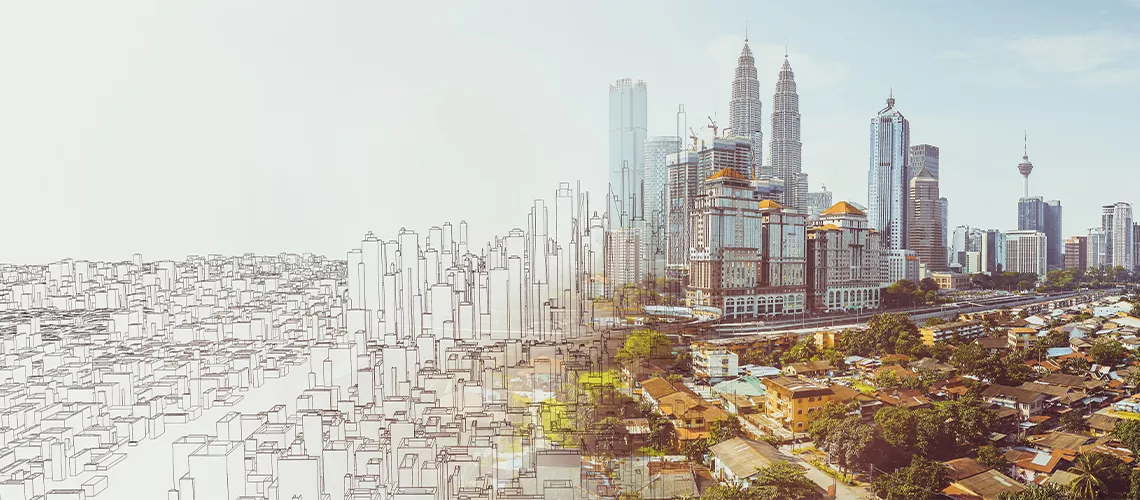
Akinrebiyo, a writer for the World Bank. Akinrebiyo argues that with the global population projected to reach 9.7 billion in the next 30 years, two-thirds of people living in densely populated urban areas, and an unprecedented building boom, there will be a need for more cement, steel, glass, and plastics than ever before. These essential building materials already account for a third of greenhouse gas emissions, which poses a major problem for sustainable development.
Akinrebiyo explains that heavy industries, such as those that manufacture cement and steel, require extremely high temperatures and thus large amounts of fossil fuels. To make virgin steel, for example, the first step is to break the chemical bond between iron and oxygen in a blast furnace at a temperature of 1000°C or hotter. To produce cement, limestone must be heated in a kiln to around 1300°C. Currently, the primary way to achieve these extreme temperatures is by combusting fossil fuels, mostly coal, which emits large amounts of carbon dioxide.
To ensure a sustainable future, particularly in emerging economies where 90% of the expansion will occur, Akinrebiyo suggests deliberate collaboration between businesses, governments, and lenders to decarbonize heavy industry. Manufacturers and investors are considering innovative technologies such as renewable fuels, carbon curing, and carbon capture and storage as routes for decarbonizing emissions. Rolling out such cutting-edge solutions at scale will require huge capital investments at attractive commercial terms.
Governments can drive innovation by offering tax breaks and subsidies to offset the costs and risks of decarbonization and by devising balanced regulations, clean energy standards, and public-private investments in infrastructure that support reuse and recycling. Collaborations between local manufacturers, global brands, and value chain partners are also beginning to coalesce and yield decarbonization initiatives that are making an appreciable difference.
The International Finance Corporation (IFC) is working with the private sector on a range of strategies to help manufacturers in heavy industries achieve greener production and realize financial savings and a competitive edge. This year, IFC made €120 million available to Senegal’s largest cement manufacturer, Sococim, to upgrade their facilities and become one of the world’s lowest-emitting cement makers. Sococim’s upgrades are a step in the right direction, but much more will be needed to meet the challenges of achieving net zero emissions by 2050.