














































Nigeria’s headline inflation rate rose to 15.15 per cent in December 2025, according to the latest Consumer Price Index (CPI) report released on Thursday, January 15 by the National Bureau of Statistics (NBS).
The statistics agency stated that the December 2025 inflation figure, measured year-on-year, reflects changes in the general price level of goods and services nationwide.
The NBS data also showed that inflation pressures increased compared to earlier periods, as the rate rose from 14.45 per cent that was recorded in November 2025.
However, the NBS used a different base year, November 2009 = 100, which showed that, on a year-on-year basis, the December headline inflation rate was 19.65 per cent lower than the rate recorded in December 2024 (34.80 per cent). This shows that the headline inflation rate (year-on-year) decreased in December 2025 compared with the same month in the previous year.
On a month-on-month basis, headline inflation stood at 0.54 per cent in December 2025, representing a decline of 0.69 percentage points from the 1.22 per cent recorded in November 2025. This shows that the pace of increase in average price levels slowed during the month under review.
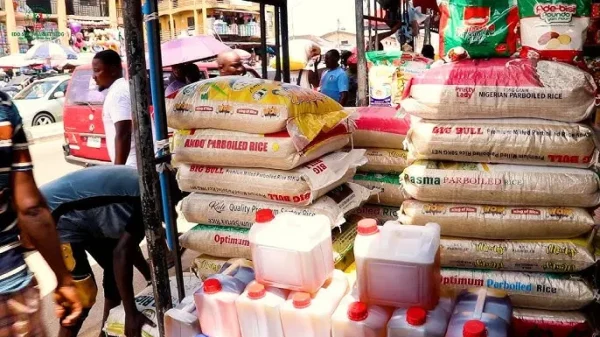
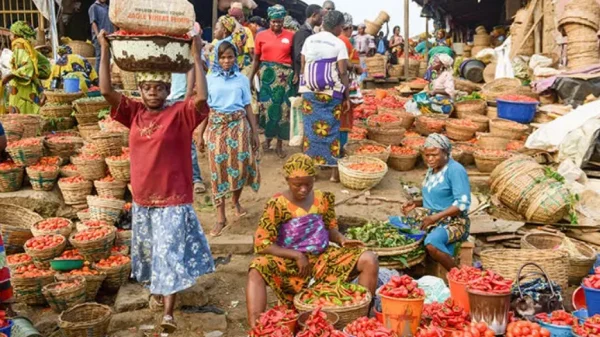
According to the NBS data, food inflation recorded a sharp moderation in December 2025. The NBS said the food inflation rate stood at 10.84 per cent year-on-year, down from 39.84 per cent in December 2024.
On a month-on-month basis, food inflation declined to -0.36 per cent, a drop of 1.49 percentage points from 1.13 per cent in November 2025.
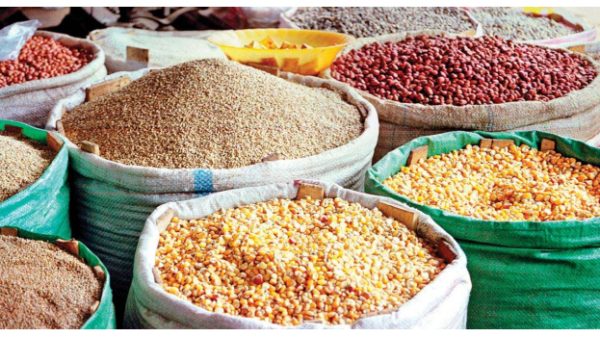
According to the NBS, the decline in food inflation was primarily driven by reductions in the average prices of staple food items, including tomatoes, garri, eggs, potatoes, carrots, millet, vegetables, plantain, beans, wheat grain, ground pepper and fresh onions, among others.
The average annual rate of food inflation for the twelve months ending December 2025 stood at 22.00 per cent, relative to the previous twelve-month average.
The report further showed that inflation trends differed between urban and rural areas.
Urban inflation stood at 14.85 per cent year-on-year in December 2025, down from 37.29 per cent recorded in December 2024. On a month-on-month basis, the urban inflation rate rose slightly to 0.99 per cent, up from 0.95 per cent in November 2025. The twelve-month average urban inflation rate was 23.46 per cent.
In rural areas, inflation stood at 14.56 per cent year-on-year, compared to 32.47 per cent in December 2024. On a month-on-month basis, rural inflation declined to -0.55 per cent, down by 2.43 percentage points from 1.88 per cent in November 2025. The twelve-month average rural inflation rate was reported at 21.93 per cent.
Overall, the NBS data show that while headline inflation rose to 15.15 per cent in December 2025, price pressures eased every month, particularly in food prices and rural areas.
The statistician general of the federation/chief executive officer, National Bureau of Statistics, Adeyemi Adeniran, noted that the December 2025 year-on-year headline inflation rate, including all other sub-indices, was obtained through the maximisation of the index reference period, that is, using a 12-month index reference period where the average CPI for the 12 months of 2024 is equated to 100.
“This is not the same as the single-month index reference period, in which December 2024 was set to 100”, he added.
At the divisional level, the three major contributors to the headline inflation were Food and non-alcoholic Beverages: 6.06 per cent, Restaurants & Accommodation Services: 1.96 percent, and Transport: 1.62 percent; while the least contributors were Recreation, Sport, and Culture: 0.05 per cent, Alcoholic Beverages, Tobacco, and Narcotics: 0.05 per cent, and Insurance and Financial Services: 0.07.
On a month-on-month basis, the headline inflation rate in December 2025 was 0.54 per cent, which was 0.68 per cent less than the rate recorded in November 2025 (1.22 per cent).
Leadership