














































Nigeria could achieve an inflation rate of 13 per cent by 2026 if critical macroeconomic indicators such as exchange rate stability, improved food supply and sustained policy reforms align effectively.
According to a leading Investment Associate at AAG Capital, Oyinkansola Aregbeseola, the feasibility of this “bull case” scenario hinges on the sustained stabilisation of the foreign exchange market and a significant boost in domestic food production.
Oyinkansola stated this on Thursday while speaking on the Base, Bull, and Bear Naira Forecast during an interview monitored by our reporter on ARISE TV.
While the 2024 rebasing of the Consumer Price Index (CPI) has created short-term data volatility, analysts argue that the convergence of a stronger Naira projected at 1,300 to the dollar and improved security in agricultural belts could effectively anchor price stability and drive a sharp deceleration in headline inflation by year-end.
Addressing the immediate concerns surrounding December’s inflation data, Oyinkansola noted that the National Bureau of Statistics is navigating a “statistical issue” caused by the 2024 fiscal year rebasing.
To ensure transparency, the NBS has committed to releasing dual reports: the raw figures showing the original spike and a normalised report for comparison.
“The majority of participants are aware that this is primarily a statistical issue… the NBS announced they are going to release two different reports to try and normalise those numbers. I think this is welcome… for the sake of transparency,” she stated.
The outlook for the year, Oyinkansola added, is categorised into three distinct scenarios, “with the Base Case, assuming inflation settles at 14.6% as the Naira holds steady at 1,450/$, continuing the stabilisation trend observed throughout 2025.
ALSO READ:
“However, a high-performance Bull Case targets a lower 13% inflation rate, a goal that requires the currency to appreciate sharply to 1,300/$. Conversely, a Bear Case remains a significant risk where rising geopolitical tensions and persistent insecurity could disrupt agricultural activities, potentially pushing the inflation rate back up to 16%.
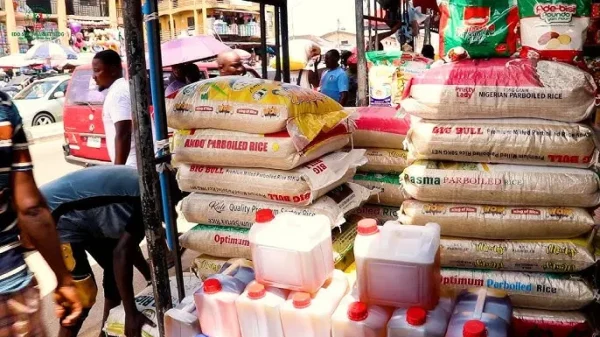
“A central theme of this forecast is the critical link between national security and the cost of living, with improved food supply serving as a primary trigger for disinflation.”
Oyinkansola emphasised that for the optimistic 13 per cent target to be met, recent efforts to curb insecurity must yield tangible results, allowing agricultural activity to rebound in the country’s food-producing belts.
She noted that without this supply-side stability, downward pressure on prices would be difficult to sustain, regardless of other fiscal interventions.
As the Central Bank of Nigeria monitors these shifting figures, the direction of monetary policy remains tethered to the “normalised” inflation data being provided by the NBS.
The Investment Associate noted that the monetary policy authorities are currently in a “wait-and-see” mode, as their next moves regarding interest rates will be entirely dependent on where inflation stands and how it moves following the technical adjustments for the 2024 rebasing period.
Punch