































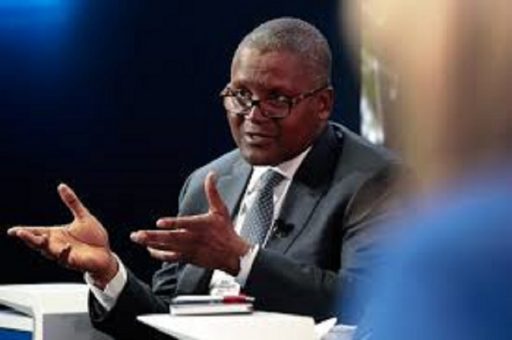
President, Dangote Group, Alhaji Aliko Dangote, and the Manufacturers Association of Nigeria (MAN), yesterday, called on the Federal Government to back the Nigeria First policy with effective legislation and enforcement across Ministries, Departments and Agencies (MDAs).
Speaking at the 5th Adeola Odutola Lecture and Presidential Luncheon in Lagos, with the theme, ‘Nigeria First: Prioritising Patronage of Made in Nigeria,’ they noted that the Nigeria First policy represents a bold opportunity for Nigeria’s sustainable industrialisation and that its success depends on clear legislation and institutional enforcement.
The event marked the grand finale of the 53rd Annual General Meeting (AGM) of the Manufacturers Association of Nigeria (MAN), with the theme chosen to reflect the fact that the Nigeria First policy is not merely an industrial ambition; it is a matter of national economic survival.
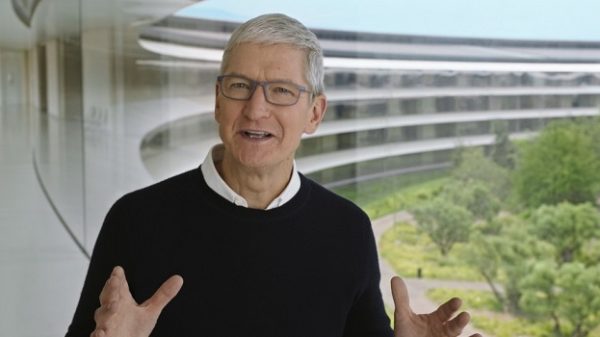
Dangote, who was Distinguished Guest Speaker, did not mince words that for the Nigeria First policy to work, it must be designed as a durable, binding national strategy for industrial development capable of withstanding political transitions and market pressures.
Accordingly, the renowned industrialist, who was represented by an Executive Director at Dangote Group and immediate past President of MAN, Engr. Mansur Ahmed, said the first thing to do to drive the policy and make it work is to gazette it as a binding law with punitive measures for non-compliance.
Dangote said legislating the Nigeria First policy is necessary to avoid the weak enforcement that led to the failure of past efforts to prioritise patronage of locally manufactured goods and services such as Executive Orders 003 and 005.
In this regard, he called on the Federal Government to mandate all MDAs to allocate at least 65 per cent of their annual procurement budgets to locally manufactured products.
He also advocated the establishment of an Independent Monitoring and Compliance Agency wit ht5e authority to conduct real-time audits of MDAs and their contractors.
Dangote also sought the imposition of sanctions and fines for non-compliance, including budgetary penalties and blacklisting from future public tenders.
He further wants the Public Procurement Act amended to embed the Nigeria First policy and link budgetary releases to verified compliance levels.
Other measure put forward by Dangote to make the policy succeed include ensuring policy stability and long-term commitment; developing a National Supplier Registry; driving consumer engagement and a national cultural shift; and incentivizing backward integration.
He also called on the Federal Government to address infrastructure and energy deficits and enhance access to finance to build local supplier capacity, pointing out that affordable financing is essential for manufacturers to scale up production and meet the procurement needs of MDAs under the policy.
Dangote further stressed the need to leverage the African Continental Free Trade Area (AfCFTA) and regional export potential to strengthen local supplier competitiveness.
“By expanding export capacity under AfCFTA, Nigerian manufacturers can achieve the economies of scale, quality standards, and market reach needed to deliver consistently under the Nigeria First policy,” he stated.
Earlier in his welcome address, President of MAN, Otunba Francis Meshioye, urged the Federal Government to back the Nigeria First policy with legislation, enforce it across all MDAs, and tie compliance to performance metrics monitored by the National Bureau of Procurement.
According to him, effective legislation and implementation are key to the policy’s success and must be carried out without any prevarication.
Meshioye also went a notch higher, urging government to set annual local content benchmarks for government procurement in key sectors such as automobiles, textiles, pharmaceuticals, and agro-processing.
He further called on government to penalise non-compliance and reward MDAs that exceed their local content procurement targets, pointing out that “Executive Orders 003 and 005 were ineffective due to the absence of consequencies for non-compliance.”
The MAN President also advocated the launch of a national ‘Made-in-Nigeria Day’ to be championed by the Federal Ministry of Industry, Trade and Investment and the National Orientation Agency (NOA) in collaboration with the Organised Private Sector of Nigeria (OPSN), the media, and key influencers.
He also asked the government to mandate product placement and visibility for Nigerian goods in government facilities, events, embassies and trade missions.
Meshioye also called on government to ensure that the Industrial Revolution Working Group is well-funded and empowered to function as a supportive policy innovation and implemetation engine to fast-track industrial reforms, redress binding constraints and monitor outcomes.
Other reliefs sought by the MAN President include the need to facilitate the review and halt of unilateral electricity tariff hikes; fast-track investments in infrastructure around industrial clusters.
He also wants a permanent revocation of the recent 15 per cent increase in import duty, as well as the provision of incentives for industries that utilise local raw materials or invest in backward integration.
Meshioye explained that the theme of this year’s AGM is of great importance to MAN, because “It speaks directly to the choice we must make as a nation. The Nigeria First policy is not merely an industrial ambition. It is a matter of national economic survival.”
He said for decades, the country had relied on a development model built around import dependence and weak enforcement of local patronage obligations.
“This model has delivered neither resilience nor inclusive growth. Instead, it has contributed to the systemic underperformance of our industries.
“If we do not intentionally support our own manufacturers, we will not be able to compete globally.
“It is unsustainable for Nigeria to continue subsidising the production and employment of other nations through unchecked imports, while our own factories continue to record low capacity utilization and serial underperformance,” he said.
According to Meshioye, “MAN believe that Nigeria First policy is about building national resilience, creating jobs at home, saving foreign exchange, driving technological innovation, and giving Nigeria the productive foundation it needs to be competitive globally.”
ALSO READ:
The Director-General, Bureau of Public Procurement (BPP), Dr. Adebowale Adedokun, said a framework to make the Nigeria First policy deliver on its promises is being worked out, and will soon be made public.
He, however, called on manufacturers to upscale the quality of locally manufactured products to global standards, assuring that the Standards Organisation of Nigeria (SON) and other relevant and statutory agencies are working with the Bureau to make the policy succeed.
Minister of State, Federal Ministry of Industry, Trade and Investment, Senator John Owan Enoh, said based on studies carried out, the national campaign to reposition made-in-Nigerian goods and services will lead to an increase of at least N3 trillion in economic terms annually.
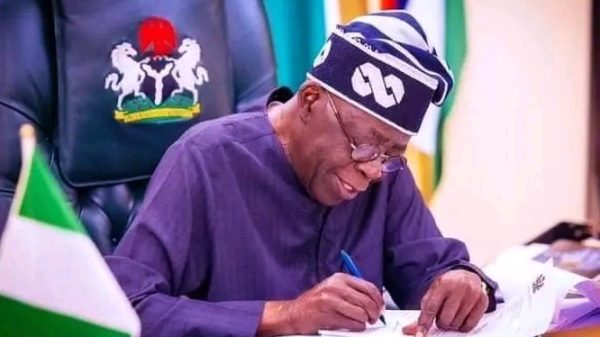
Sen. Enoh, who represented the Special Guest of Honour, President Bola Ahmed Tinubu, also said the manufacturing sector will grow by about 30 per cent within the next 2-3 years, contributing about 500, 000 additional jobs.
He also said the Nigeria First policy campaign will lead to about a 30 per cent reduction in non-essential imports.
The Nation