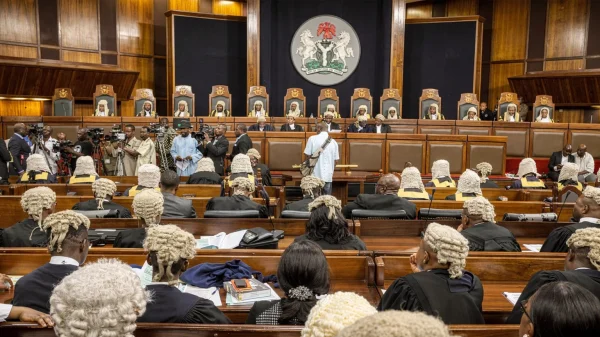























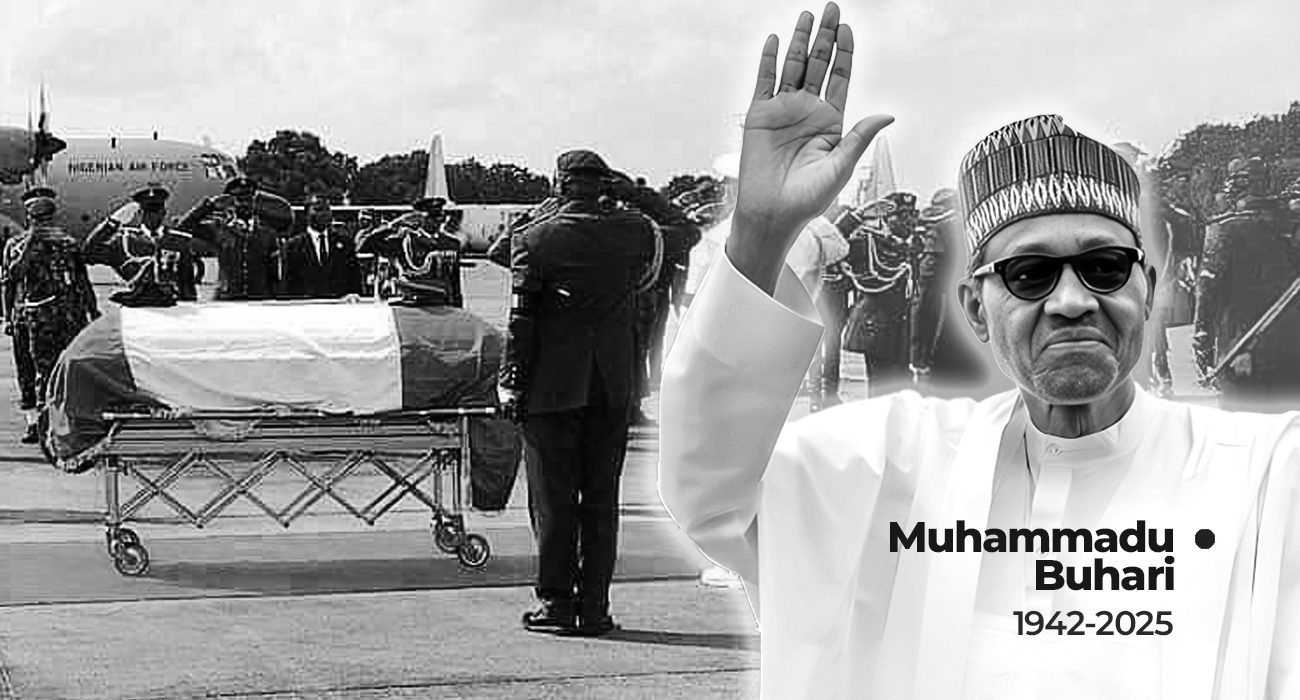
Grief and a deep sense of loss hung thick in the air over Daura on Tuesday. The skies, heavy with sorrow, soon broke into a weeping rain that soaked the soil of the quiet Katsina town, as relatives, friends, and mourners gathered to bid farewell to former President Muhammadu Buhari, laid to rest in his ancestral agrarian homeland.
It was a solemn moment as the lifeless body of the 82-year-old was brought out of a casket, draped in sparkling green-white-green Nigerian colours, and lowered into the earth at exactly 5:50 pm in the presence of grieving children, family members, and associates.
Full military honours and other accompaniments, such as gun salutes and tuneful processions befitting a former Commander-in-Chief of the Armed Forces, were accorded to Buhari. Islamic rites also preceded the interment of the former Nigerian leader in Daura.
Beyond being the final resting place of the general-turned-statesman, Daura, a small agrarian town in North-West Nigeria, was also the birthplace of the man known by millions of his cult-like northern followers as the “Mai Gaskiya” in Hausa language, meaning the truth-teller.
Buhari was more than a regional leader; he led Nigeria for a cumulative period of nine years and eight months, both as a military head of state and a democratically elected president, making him one of the longest-serving Nigerian leaders.
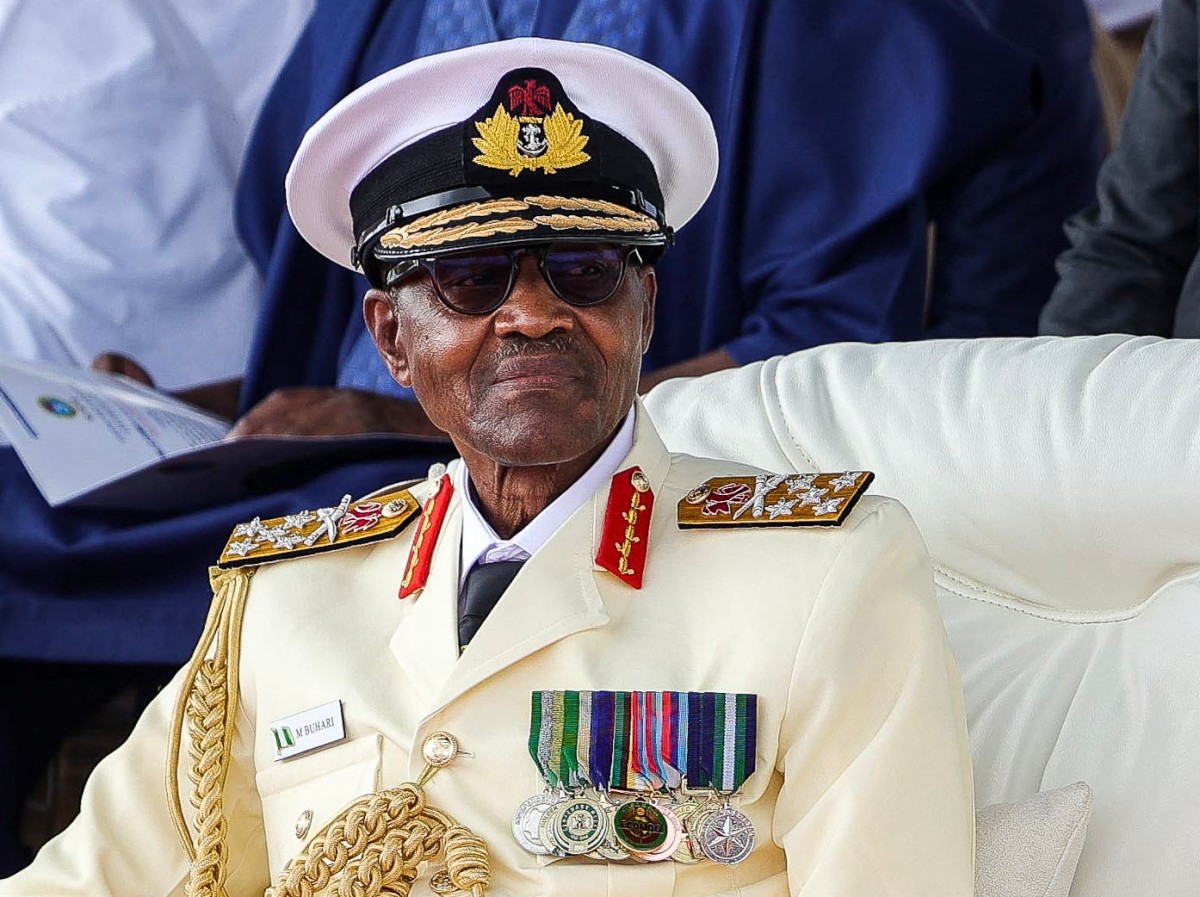
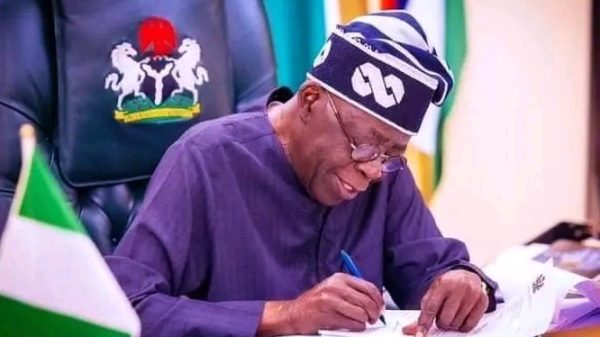
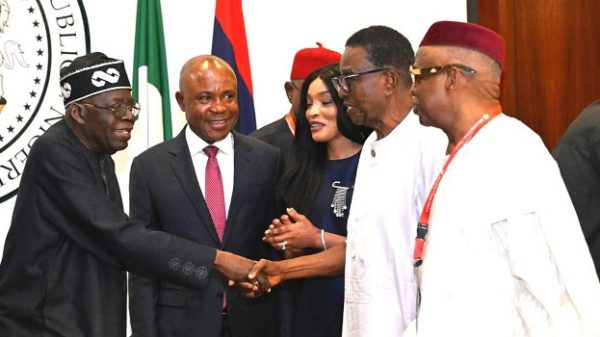
Leading the roll call of mourners-in-chief was the former president’s widow, Aisha; Buhari’s successor, President Bola Tinubu; his vice, Kashim Shettima; Buhari’s former deputy, Yemi Osinbajo; former vice president Atiku Abubakar; billionaire businessman Aliko Dangote; serving and former governors, ministers, first-class traditional rulers, religious leaders, among others.
Before the funeral, Tinubu received the body of his predecessor at the Katsina Airport after it was flown from London, the United Kingdom, where the former Nigerian president died at The London Clinic on Sunday, July 13, 2025, after a prolonged illness.
Born on December 17, 1942, Mai Gaskiya served as the country’s military head of state between January 1984 and August 1985. He later returned as Nigeria’s democratically elected president in May 2015, a position he held for eight unbroken years until May 2023, when he handed over to his party’s candidate, Tinubu.
ALSO READ:
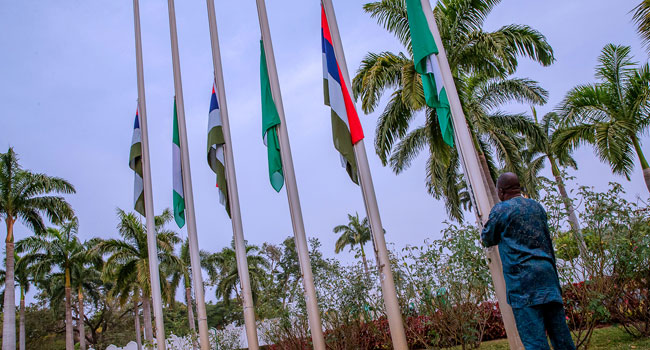
It’s a day of national mourning for Nigeria, as declared by the Federal Government, with flags at half-mast as a mark of respect for the departed leader.
Millions of Nigerians will remember Buhari as a man who championed the fight against indiscipline and corruption. However, a mixed legacy will trail his departure, as critics have faulted some of his programmes and his handling of some policies.