












































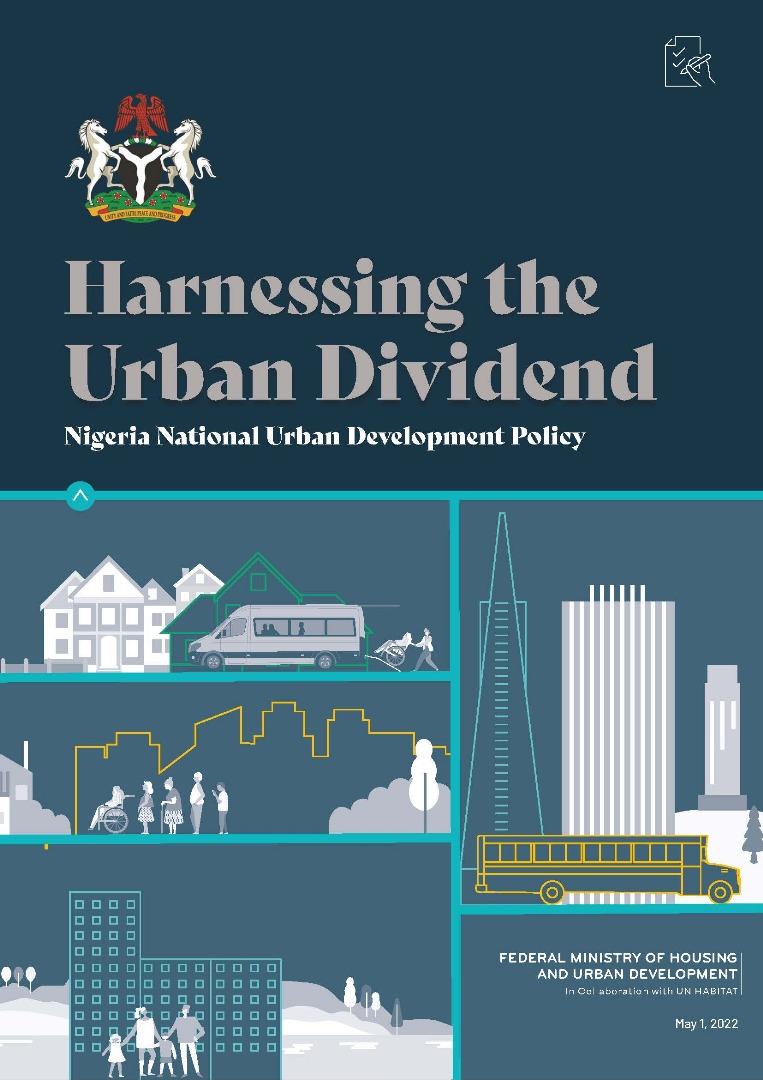
In a bold move to reshape Nigeria’s urban future, the Federal Executive Council (FEC) has approved a revised National Urban Development Policy (NUDP) that aims to guide the planning, development, and governance of the country’s cities over the next decade.
The policy, developed by the Federal Ministry of Housing and Urban Development in collaboration with UN-Habitat and other stakeholders, replaces the 2012 edition. It reflects the realities of Nigeria’s urban challenges and aligns with global frameworks such as the Sustainable Development Goals (SDGs), the New Urban Agenda, the Paris Agreement on Climate Change, and the African Union Agenda 2063.
With over 70 percent of Nigerians projected to live in urban areas by 2050, the revised policy introduces what the government calls a “business unusual” approach. It seeks to move away from fragmented and reactive planning toward a more integrated, inclusive, and long-term strategy for managing the country’s urban growth.
Speaking on the significance of the approval, the Minister of Housing and Urban Development, Arc. Ahmed Musa Dangiwa, described the policy as a turning point.
“The NUDP is a critical milestone in Nigeria’s urban journey. It provides us with a clear roadmap to plan and build cities that are productive, liveable, inclusive, and climate-resilient. With this policy, we are better positioned to harness the full potential of our urban spaces to drive national development and uplift the quality of life for all Nigerians,” he said.
The policy focuses on improving urban governance by proposing the creation of metropolitan commissions and regional planning bodies to manage fast-growing urban areas that cut across administrative boundaries. It also calls for improved coordination among all tiers of government to strengthen urban management.
Social inclusion is a core part of the policy. It promotes city planning that considers the needs of women, youth, persons with disabilities, and the informal sector, aiming to ensure that all residents have access to housing, infrastructure, and basic services.
The policy also tackles the growing threat of climate change. With Nigeria facing frequent flooding, drought, and other extreme weather events, the NUDP promotes climate-resilient planning through green infrastructure, nature-based solutions, and the adoption of renewable energy. It supports the “15-minute city” concept, where essential services are accessible within a short walk or bike ride.
Economic transformation is another major theme. The policy positions cities as engines of job creation and growth beyond oil, advocating for mixed-use development, better integration of land use and transport, and stronger municipal finance systems to reduce reliance on federal funding.
To improve planning accuracy and service delivery, the NUDP encourages the use of digital tools such as Geographic Information Systems (GIS) and LIDAR mapping.
An implementation framework has been embedded in the policy, clearly outlining the roles of federal, state, and local governments. It also calls for capacity building, awareness campaigns, and partnerships with the private sector, academia, and civil society.
The ministry said it would immediately begin sensitisation and capacity-building exercises across the country to ensure smooth rollout of the policy.
The NUDP is part of a broader set of initiatives by the ministry to advance sustainable urban development in line with President Tinubu’s Renewed Hope Agenda. These include the ongoing review of the National Physical Planning Standards and the development of a National Policy on Rural Settlements Planning and Development, which aims to reduce pressure on cities by improving life in rural communities.
The revised National Urban Development Policy document is available on the ministry’s website: https://www.fmhud.gov.ng/themes/front_end_themes_01/images/download/25060893318.pdf